

Switches
Power and data for connected devices, delivered over a single Ethernet cable. Explore network switches that power and connect security cameras, Wi-Fi access points, fare validators, and payment terminals, with PoE+ (802.3at) and PoE++ (802.3bt) ports and copper or fiber uplinks to the existing network.
Paygasus is an authorized source for Peplink and Ericsson Cradlepoint switches, and more.
Cloud-managed switches add remote port monitoring, configuration, PoE scheduling, and power cycling through the manufacturer console. Fanless, ruggedized models are built for unheated equipment cabinets, transit depots, roadside enclosures, and other demanding environments.
Browse the products below or request a configured quote sized to the connected devices and network on site.
- ✔ Authorized source, manufacturer warranty on every unit
- ✔ PoE budget and uplinks sized for the site
- ✔ Talk to a specialist before buying
- ✔ Shop all networking devices
-
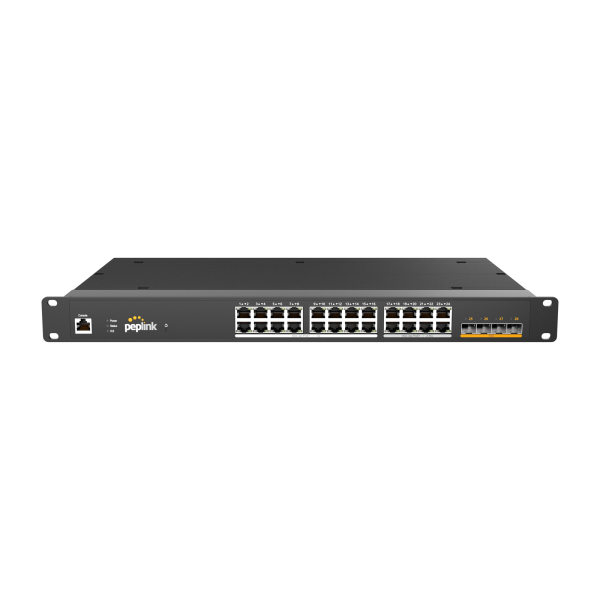
Peplink SD Switch 24-Port 2.5G PoE+ Rugged
Fanless rugged 24-port PoE+ switch rated -40 to 65 °C with 2.5G ports, four 10G SFP+ uplinks, DC power and a 250W budget.
More details$1,199.00 -
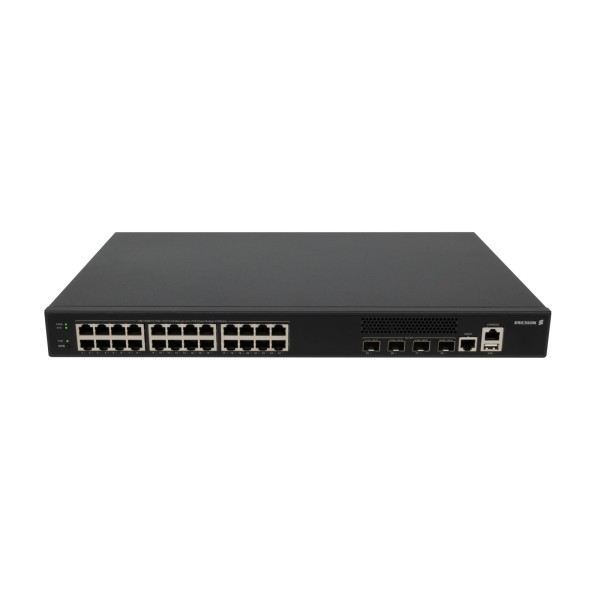
Ericsson Cradlepoint SW2400P 24-Port Gigabit PoE Switch
Cloud-managed 24-port Gigabit PoE switch with four 10G SFP+ uplinks and a 370W PoE budget, run from the same Ericsson NetCloud console as the...
More details$1,299.00 -
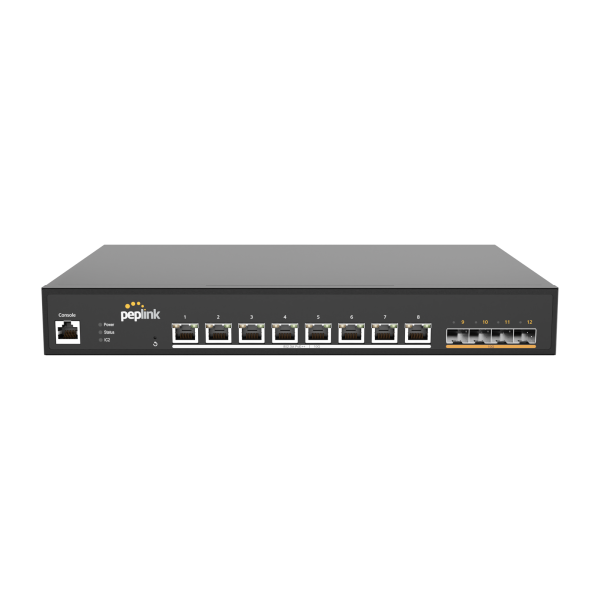
Peplink SD Switch 8-Port 10G PoE++ with 4x SFP+
Fanless 8-port 10G PoE++ switch with four 10G SFP+ uplinks and a 720W budget, managed from InControl.
More details$799.00 -
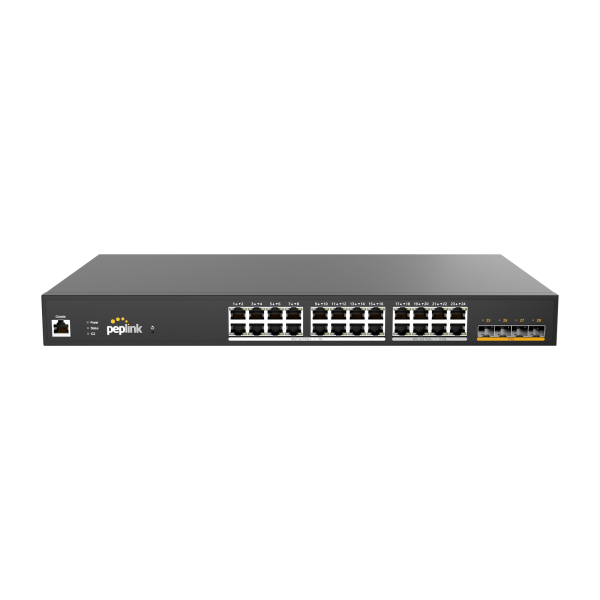
Peplink SD Switch 24-Port 2.5G PoE+
24-port PoE+ switch with sixteen gigabit and eight 2.5G ports, four 10G SFP+ uplinks and a 410W budget, managed from InControl.
More details$799.00 -
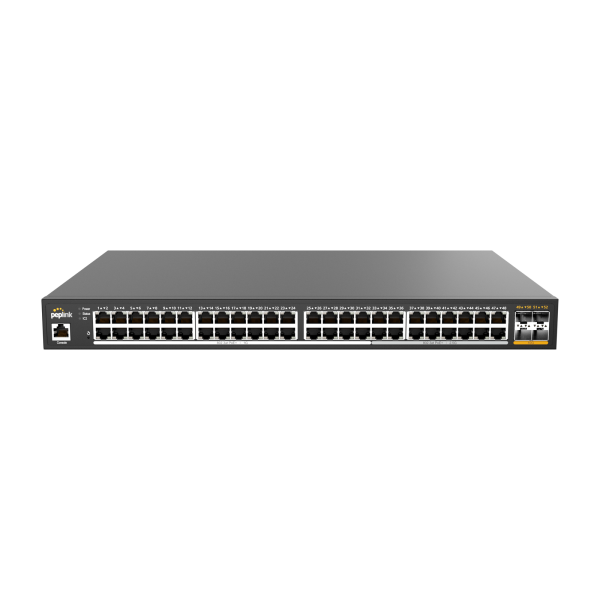
Peplink SD Switch 48-Port 2.5G PoE+
48-port PoE+ switch with thirty-two gigabit and sixteen 2.5G ports, four 10G SFP+ uplinks and a 740W budget for large sites.
More details$1,199.00
No products match these filters.
Power and Data on One Cable
Power over Ethernet (PoE) runs power and data over one Ethernet cable, with no separate power run to each device. A PoE switch allocates power by device draw, per-port limit, and the switch's total power budget.
- ✔ PoE+ (802.3at) delivers up to 30 W per port for security cameras, Wi-Fi access points, phones, and fare validators.
- ✔ PoE++ (802.3bt) delivers up to 60 W or 90 W per port for higher-draw devices, including pan-tilt cameras, outdoor access points, and displays.
- ✔ Total budget sets how many powered devices a switch can run at once. Add up the maximum draw of every connected device and leave headroom for peak demand and growth.
Sizing a PoE Switch: Ports, Speed, Uplinks, and Budget
Size a PoE switch by port count, speed, uplinks, power input, and environment, matched to the devices it will feed.
- ✔ Port count. From compact switches for kiosks and equipment cabinets to 48-port models for larger facilities, depots, and offices.
- ✔ Port speed. Gigabit Ethernet for most devices; 2.5G and 10G ports for high-bandwidth access points, cameras, and backbone links.
- ✔ Uplinks. Fiber uplink ports for longer runs between buildings, platforms, and remote cabinets.
- ✔ Power input. AC for network closets; DC input on ruggedized models for industrial cabinets, vehicles, and specialized installs.
- ✔ Environment. Fanless designs, extended operating temperature ranges, and ruggedized housings for locations without climate control. Explore Rugged Switches.
Managed, Unmanaged, or Cloud-Managed
Management options range from plug-and-play to multi-site administration from one console.
- ✔ Unmanaged switches pass traffic and, on PoE models, power with no configuration. The fit for simple installs with limited management needs.
- ✔ Managed switches add VLANs, Quality of Service (QoS), and per-port configuration through a local interface.
- ✔ Cloud-managed switches add remote configuration and monitoring across sites through the manufacturer console. The Paygasus catalog focuses on cloud-managed models for distributed operations.
Cloud-Managed Switching
Cloud-managed switches report to the manufacturer console. Depending on the model, administrators can configure individual ports, separate traffic with VLANs, schedule PoE power, and power-cycle a frozen camera or access point remotely.
Port changes and restarts can be made remotely, with consistent settings across locations.
Cloud management plans and terms are listed on each product page and quote.
Frequently Asked Questions
How much PoE budget does a site need?
Add the maximum draw of every connected PoE device, then leave headroom for startup surges and future devices. Each product page lists the switch's total PoE budget and maximum output per port.
PoE+ or PoE++?
PoE+ (802.3at) delivers up to 30 W per port, enough for most cameras, access points, phones, and validators. PoE++ (802.3bt) delivers up to 60 W or 90 W per port for pan-tilt cameras, outdoor access points, and other higher-draw equipment. PoE++ ports are backward compatible with standards-based PoE+ devices.
Can the switch be in a different building from the router?
Yes. Switches with fiber uplink ports connect equipment across buildings and other long runs. Compatible fiber modules, port types, and connection requirements are listed in each product's specifications.
When is a rugged switch needed?
For roadside cabinets, transit depots, platforms, vehicles, and other sites without climate control. Depending on the model, rugged switches offer fanless operation, DC power input, extended operating temperature ranges, and hardened construction.
Can one switch serve devices on separate networks?
Yes. Managed switches with VLANs separate devices into distinct logical networks on the same physical switch, keeping security cameras, payment terminals, and staff devices apart according to network and security policies.