
SD-WAN Routers
One building, several lines, and one network across all of them. SD-WAN routers take fiber, cable, 5G, LTE, and satellite paths into one unit, bond them for capacity, and fail over between them with sessions held in place.
Paygasus carries Peplink and Ericsson Cradlepoint SD-WAN routers, and more.
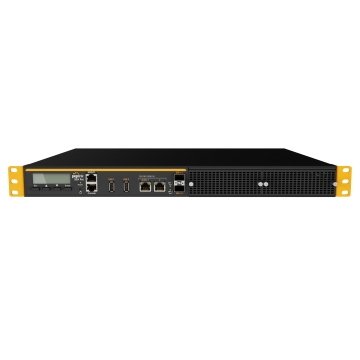
Small-branch units with embedded 5G or LTE sit on a desk or in a small rack in a branch or depot office. Fiber-first units keep a landline primary with 5G on standby. Modular chassis with swappable modules and solid-state storage carry a headquarters, and aggregation units terminate tunnels from hundreds of remote sites.
Browse the products below or request a quote that sizes the unit to the building's lines, users, and remote sites.
- ✔ Branch, chassis, and aggregation units from the authorized source, with the manufacturer warranty
- ✔ Sized to the building's lines, users, and remote sites
- ✔ Talk to a specialist before buying
- ✔ Shop all routers
Bonding, Hot Failover, and Smoothing
- ✔ Bonding runs two or more paths at once and spreads traffic across them, giving a branch on cable plus 5G the capacity of both.
- ✔ Hot failover keeps a second path warm and moves sessions to it the moment the primary drops, designed to carry a phone call or terminal transaction through the switch.
- ✔ Smoothing sends duplicate packets across two paths for loss-sensitive traffic such as voice and video, and discards whichever copy arrives second.
- ✔ Tunnels to headquarters carry branch traffic to a central unit or hub, where policy, logging, and the connection back to the data center are set once.
Which Class for Which Building
- ✔ Small branch with embedded cellular. A compact unit with 5G or LTE built in, two or three wired WAN ports, and Wi-Fi, for a branch office, depot office, or small admin building.
- ✔ Fiber-first branch. A unit built around a fiber or cable primary with 5G on standby, for a staffed building where cellular is the safety net rather than the main road.
- ✔ Modular chassis. A headquarters or regional unit that takes swappable modules for extra 5G radios, fiber ports, or PoE, plus solid-state storage for on-box applications, and grows without replacement.
- ✔ Aggregation. High-capacity units at the data center or hosting site that terminate tunnels from hundreds of branch routers.
Carrier Programs and Cellular Classes on These Units
Units with embedded cellular come in LTE CAT-12, CAT-20, and 5G, and several carry FirstNet Capable, FirstNet Ready, or T-Priority marks. The cellular radio in an SD-WAN router is usually the backup path, making the mark most relevant where the building has to stay reachable during a wider outage.
Frequently Asked Questions
What does SD-WAN mean on a router?
The router treats every connection into the building as a path it can steer traffic across by policy, rather than one primary and one passive backup. Bonding, hot failover, and smoothing are the tools it uses.
Can a branch router bond cable and 5G?
Yes. That is the typical small-branch setup: a wired primary, with cellular bonded or on hot standby, set from the console.
When does a building need a modular chassis?
When it carries a headquarters or region, needs more than two or three WAN paths, or will add radios and ports over its service life without a forklift replacement.
What terminates the tunnels from remote sites?
An aggregation router at the data center, or a virtual hub license run on the buyer's own server or cloud. See Licensing & Care for hub licenses.
Is the cellular radio in an SD-WAN router the primary connection?
Usually it is the backup behind fiber or cable. Small-branch units at locations without a landline run on cellular as the primary.